
Fluid Film Bearings
Bearings that operate with a continuous lubricant film, separating moving surfaces for smooth, reliable performance under full-film conditions.
Overview
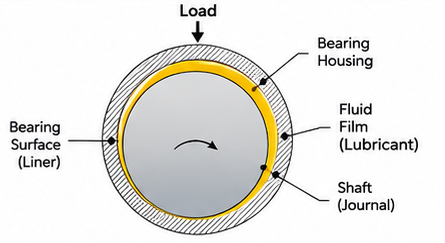
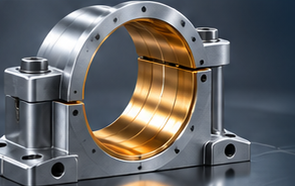
Fluid film bearings are plain bearings in which a thin film of oil or gas separates the rotating journal from the bearing surface. Pressure within the film supports the load, reducing friction and wear. Hydrodynamic bearings generate pressure through relative motion, while hydrostatic bearings use an external pressure supply. These bearings are widely used in high-speed, heavy-load and precision applications.
Key Advantages
How It Works
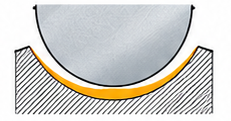
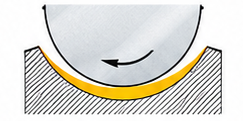
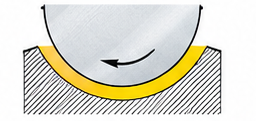
In a hydrodynamic bearing, shaft rotation draws lubricant into a converging gap. The resulting pressure supports the load and separates the surfaces at suitable operating conditions.
Applications
Used in demanding industrial machinery, including:
Key Takeaways
Fluid film bearings provide a low-friction solution for demanding machinery when lubrication and operating conditions are correctly maintained.
- Continuous lubricant film
- Surface separation during full-film operation
- High load and speed capability
- Smooth, stable operation